Let’s be real for a moment. The romance of hanging laundry out to dry fades pretty quickly when you’re on your third rainy day in a row, staring at a mountain of damp clothes taking over your tiny apartment. If you’ve ever found yourself in this situation, you’ve probably typed “Portable Clothes Dryers Reviews” into a search bar with a mix of hope and skepticism. Can a machine that small really work? I’m here, as your trusted expert from Clothes Dryer Guide, to tell you that yes, they absolutely can—and they can be a total game-changer for small-space living. But not all portable dryers are created equal. This guide will walk you through everything you need to know to find the perfect pint-sized powerhouse for your needs.
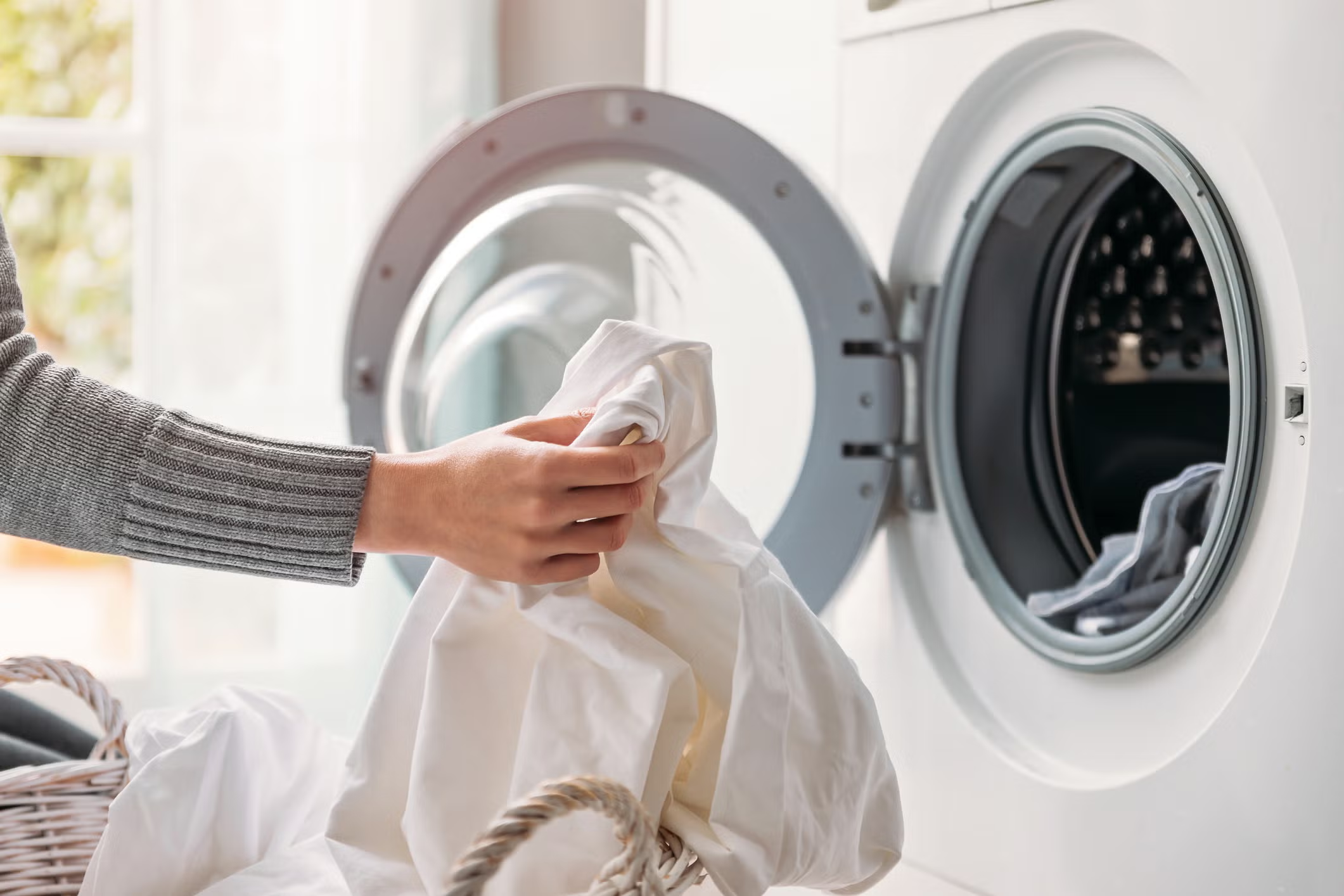
Why Even Consider a Portable Dryer?
Before we dive into the nuts and bolts, let’s talk about why these compact machines are becoming so popular. A full-sized dryer is a luxury many of us in apartments, condos, RVs, or smaller homes simply don’t have the space or the proper 240-volt outlet and venting for. A portable dryer swoops in to solve that problem.
- Space-Saving Saviors: Their compact footprint means you can tuck them away in a closet or a corner when not in use. They’re the ultimate solution for maximizing limited square footage.
- Convenience is King: Say goodbye to lugging heavy laundry baskets to the laundromat and fumbling for quarters. Having a dryer in your own home, on your own schedule, is a freedom you won’t know how you lived without.
- Plug and Play: Most portable dryers run on a standard 110/120-volt outlet—the same one you use for your lamp or TV. No need for an electrician to do any special wiring.
The Lowdown on Types of Portable Dryers
When you start looking at portable clothes dryers reviews, you’ll quickly notice they fall into a few main categories. Understanding the difference is the first step to making a smart choice.
Vented Portable Dryers
This is the most common type. Think of it as a miniature version of a traditional dryer. It works by tumbling your clothes with heated air and then expelling the hot, moist air outside through a flexible vent hose. You’ll typically run this hose to a nearby window or a specially designed indoor venting kit.
- Pros: Generally dry clothes faster than other portable types and are often less expensive upfront.
- Cons: You absolutely need a place to vent the hose, which can be a hassle depending on your living situation.
Condenser Portable Dryers
These are a bit more high-tech and offer incredible flexibility. Instead of venting moist air out, a condenser dryer cools the air internally, causing the moisture to condense into water. This water is then collected in a removable tray or tank that you simply empty after a cycle, much like you would with a dehumidifier.
- Pros: Can be placed almost anywhere since they don’t require an external vent. This is a huge win for basement apartments or rooms without windows.
- Cons: They can take a bit longer to dry a load and sometimes release a small amount of warm, humid air into the room. They also tend to have a higher price tag.
Spin Dryers (A Different Beast Entirely)
It’s important to mention spin dryers because they often get lumped in with portable dryers. However, they don’t use heat. Instead, they use centrifugal force—spinning at incredibly high speeds—to wring a massive amount of water out of your clothes. Your clothes will come out damp, not dry, but they will air-dry in a fraction of the time. They are an excellent partner to a drying rack.
Your Ultimate Checklist: How to Choose the Best Portable Dryer
Okay, you know the types. Now, how do you pick the one? Let’s break down the key factors to consider. This is the stuff that really matters when you’re comparing different models and reading through those portable clothes dryers reviews.
- Capacity and Load Size: Portable dryer capacity is usually measured in cubic feet or pounds. A typical range is 1.5 to 3.5 cubic feet. To put that in perspective, a 1.5 cu. ft. dryer is perfect for a single person and can handle a few shirts, some socks, and underwear. A larger 3.5 cu. ft. model might be suitable for a couple and can handle a set of sheets or a few bath towels. Be realistic about your laundry habits.
- Venting vs. Non-Venting: This is your biggest decision. Do you have easy window access for a vented model? Or is the “place it anywhere” freedom of a condenser model worth the extra cost and potentially longer drying time? There’s no wrong answer, only what’s right for your space.
- Power and Energy Efficiency: As mentioned, most run on a standard household outlet. Pay attention to the wattage. While portable dryers aren’t typically Energy Star rated like their full-sized cousins, a lower wattage will generally mean lower electricity consumption. However, it might also mean longer drying times. It’s a trade-off.
- Features That Actually Matter: Don’t get distracted by a million buttons. Focus on these:
- Multiple Heat Settings: Having a high heat for towels and a low/delicate setting for other clothes is crucial to avoid shrinking or damaging your garments.
- Auto-Dry Sensor: Some more advanced models have sensors that shut the machine off when your clothes are dry. This is a fantastic feature that saves energy and prevents over-drying.
- Portability Features: Look for wheels or side handles if you plan on moving the unit around frequently.
- Noise Level: Let’s face it, you’ll likely be in the same room as this appliance while it’s running. Reviews are your best friend here. Look for comments on how loud the machine is. A low hum is expected; a jet engine is not.
Getting the Most Out of Your Pint-Sized Powerhouse: Tips & Tricks
Owning a portable dryer is one thing; using it effectively is another. I’ve seen it all in my years at Clothes Dryer Guide. Here are my top tips to make sure you and your new dryer get along famously.
- Don’t Overload It! This is the number one mistake people make. Clothes need room to tumble freely to dry efficiently. A cramped drum means wrinkled, still-damp clothes and a much longer cycle.
- Clean the Lint Filter Every. Single. Time. I cannot stress this enough. A clogged lint filter is a fire hazard and it dramatically reduces drying efficiency. It takes 10 seconds and makes a world of difference.
- Give It Some Breathing Room: Make sure there are a few inches of clearance around the dryer, especially at the back where the air intake is. Good airflow is key.
- Use Wool Dryer Balls: These are fantastic for portable dryers. They help separate clothes, improve airflow, and can reduce drying time and static. (You can learn more by checking out our guide on laundry accessories).
“The biggest mindset shift with a portable dryer is patience. It’s not going to dry your heavy bath towels in 45 minutes like a commercial machine. Respect its limitations, use it correctly, and it will become one of the most valuable appliances you own.”
— Dr. Eleanor Vance, Small Appliance Efficiency Expert
A Critical Look at Portable Clothes Dryers Reviews Online
When you’re scrolling through reviews, it’s important to read between the lines. Many negative reviews stem from unrealistic expectations. If you see complaints like “it takes too long” or “it doesn’t get super hot,” remember that this is by design. These machines use less power and a gentler heat to work safely on a standard electrical circuit. A good review will compare the machine’s performance to other portable models or the alternative (the laundromat), not to a full-sized 240-volt behemoth.
Frequently Asked Questions
How long do portable dryers take to dry clothes?
It varies greatly depending on the model, load size, and fabric type. A small load of synthetics might take 45-60 minutes, while a load with a couple of pairs of jeans could take upwards of 90 minutes to two hours.
Can a portable dryer handle heavy items like jeans or towels?
Yes, but you have to be strategic. Dry them in small loads. For example, dry only two or three bath towels at a time. It will get the job done, but it requires more patience than a full-sized dryer.
Do I need special installation for a portable clothes dryer?
For most models, no. A vented dryer just needs you to connect the hose and place it near a window. A condenser dryer is even simpler—just plug it in. Some people opt for wall-mounting kits to save floor space, which requires a bit more effort.
How much electricity does a portable dryer use?
They are generally more energy-efficient per load than full-size electric dryers simply because they are smaller and use less power. However, since they may run for longer, the cost difference might not be huge. Check the specific wattage of the model you’re interested in to estimate its consumption.
Where is the best place to put a portable clothes dryer?
A room with good ventilation is ideal, especially for condenser models which can add some humidity to the air. A bathroom with an exhaust fan or a kitchen are common spots. Always place it on a hard, level surface.
Your Laundry Freedom Awaits
Making the leap to a portable dryer can feel like a big step, but it’s an investment in convenience and reclaiming your time. By understanding the different types, knowing what features to look for, and reading portable clothes dryers reviews with a critical eye, you can confidently choose a machine that will serve you well. You’re not just buying an appliance; you’re buying freedom from the laundromat and a solution to your small-space laundry woes.
We’d love to hear about your experiences! If you own a portable dryer, share your favorite tip or model in the comments below. Your insight could be the final piece of the puzzle for another reader.