Walking into the appliance section can feel overwhelming. Gleaming rows of machines, all promising to make laundry day a breeze. But behind the stainless steel and fancy dials lies a crucial question that can make or break your laundry routine: What Size Dryer Do I Need? It’s a question we get all the time here at Clothes Dryer Guide, and honestly, getting it right is more important than you might think. Choose too small, and you’re stuck running endless cycles. Go too big, and you’re wasting energy and money.
Don’t worry, we’re here to demystify the entire process. Think of us as your friendly guide, here to cut through the jargon and help you find the perfect laundry partner for your home. Let’s get you from laundry-puzzled to laundry-pro.
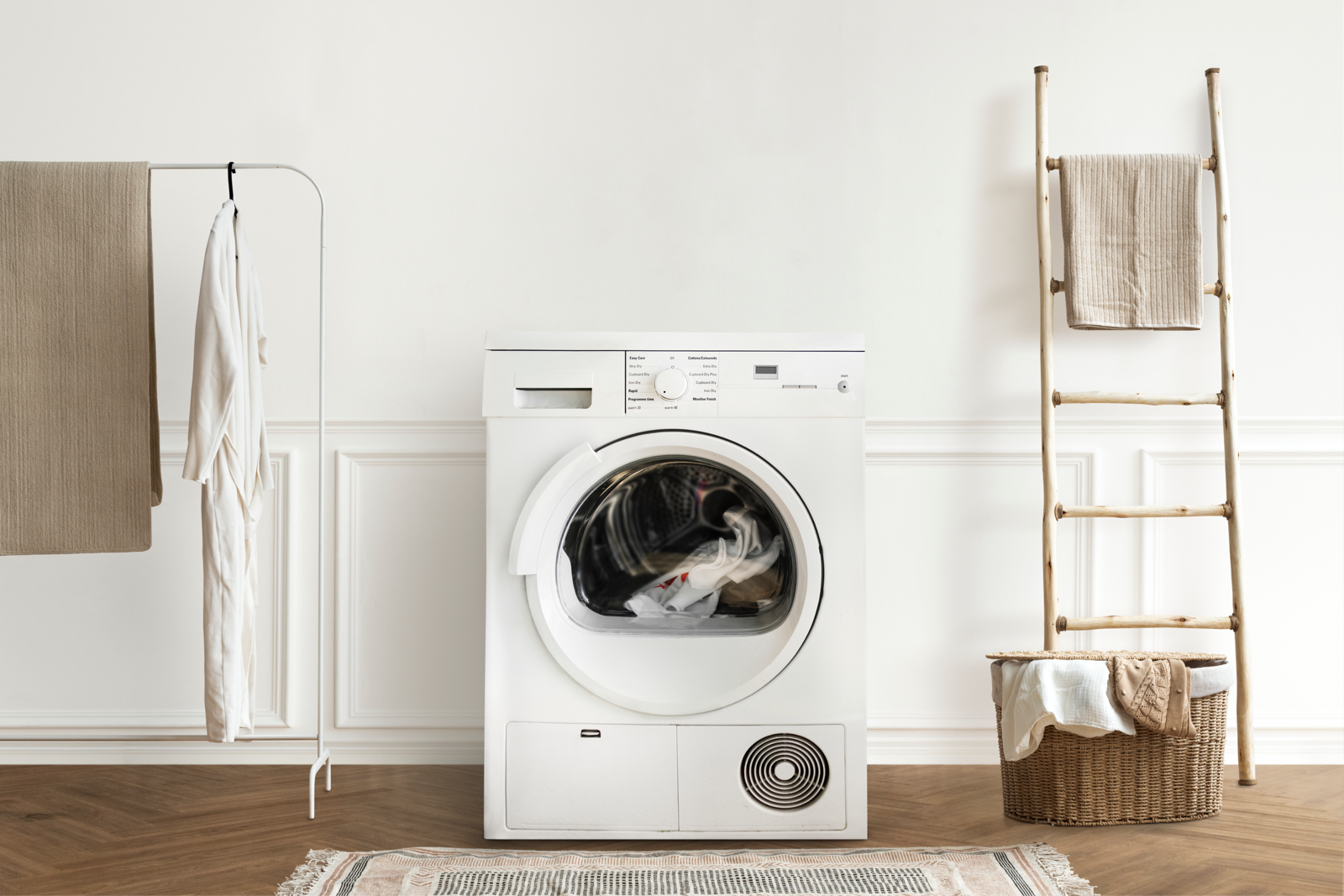
Why Dryer Size is a Bigger Deal Than You Think
Before we jump into the numbers, let’s talk about why this matters so much. A dryer doesn’t just blast your clothes with heat; it tumbles them in a spinning drum of hot air. For this to work efficiently, your clothes need room to spread out and let that air circulate.
When clothes are crammed into a dryer that’s too small, they clump together in a damp ball. The result? Longer drying times, stubbornly damp spots, and a whole lot of wrinkles. You end up running the dryer for another 20 minutes, then another 10, wasting energy and putting unnecessary wear and tear on your fabrics.
On the flip side, a dryer that’s way too big for your typical load size isn’t great either. While it’s not as bad as an undersized one, you’re still paying for capacity you never use and potentially using more energy per load than necessary. The sweet spot is a machine that’s just right.
The Unspoken Rule: Your Dryer Should Be Twice the Size of Your Washer
If you remember only one thing from this guide, let it be this: Your dryer’s capacity should be roughly double your washer’s capacity.
This is the golden rule of laundry pairs. Why? Wet clothes are compressed and heavy in the washer. When they move to the dryer, they need to expand, fluff up, and have room for hot air to tumble through them effectively. A dryer with about twice the cubic feet of space as your washer provides the perfect environment for this to happen.
How Do I Find My Washer’s Capacity?
This is a great question. You can usually find your washer’s capacity (measured in cubic feet, or cu. ft.) in a few places:
- On a sticker inside the washer door.
- In the user manual (if you can find it!).
- By searching for the model number online.
Once you have that number, just double it to find your ideal dryer capacity. For example, if you have a 4.5 cu. ft. washer, you should be looking for a dryer that’s around 9.0 cu. ft. A little more or less is fine, but this gives you a fantastic starting point.
What Size Dryer Do I Need for My Lifestyle?
The washer-matching rule is your primary guide, but your family’s unique laundry habits also play a huge role. Let’s break down dryer capacity into common sizes and match them to different households.
Compact Dryers (3.5 – 4.0 cu. ft.)
These smaller units are perfect for tight spaces like apartments, condos, or RVs. They are often stackable and can handle the laundry needs of one or two people who do laundry frequently.
- Best for: Individuals, couples, or anyone with limited space.
- Can Handle: A few towels, a set of sheets, or a small load of daily clothes.
- Heads up: You won’t be drying a king-size comforter in one of these.
Full-Size or Standard Dryers (5.0 – 7.5 cu. ft.)
This is the sweet spot and the most common size range on the market. A dryer in this range can comfortably handle the average laundry loads generated by a family of three or four.
- Best for: The majority of families.
- Can Handle: A full load of clothes, a week’s worth of towels for the family, or even a queen-size comforter.
- Our Take: If you’re unsure, a dryer around 7.0 to 7.5 cu. ft. is a very safe and versatile bet for most households.
Large Capacity Dryers (8.0 cu. ft. and up)
Welcome to the big leagues. These dryers are built for serious laundry duty. If you have a large family, athletes who generate piles of uniforms, or you just love to wash all your bedding in one go, a large capacity model is your best friend.
- Best for: Families of five or more, or anyone who frequently washes bulky items.
- Can Handle: A massive load of towels, a king-size comforter with room to spare, or the laundry of a whole soccer team.
- Pro Tip: These are often paired with the largest capacity washers (5.0 cu. ft. and above) to create a true laundry powerhouse duo.
Beyond Cubic Feet: Other Sizing Factors to Consider
Capacity is king, but it’s not the only factor. Before you click “buy,” make sure you’ve considered these practical points.
Physical Space and Dimensions
A 9.0 cu. ft. dryer is useless if you can’t get it through the door.
- Measure your space: Get out the tape measure and note the height, width, and depth of the area where the dryer will live.
- Account for clearance: You need at least one inch of space on the sides and back for air circulation and about four to six inches at the back for venting.
- Measure your path: Don’t forget to measure doorways, hallways, and any tight corners on the path from your front door to the laundry room.
Dryer Type Matters
The type of dryer you choose can also influence its size and installation requirements. Here’s a quick comparison.
| Feature | Vented Dryer | Condenser Dryer | Heat Pump Dryer |
|---|---|---|---|
| How it Works | Vents hot, moist air outside via a duct. | Extracts moisture and collects it in a tank or drains it. | Recycles hot air, making it highly efficient. |
| Installation | Needs an external wall for the vent. | Can be placed anywhere with a power outlet. | Can be placed anywhere with a power outlet. |
| Energy Use | Standard | Moderate | Most Efficient |
| Upfront Cost | $ (Least Expensive) | $$ (Moderate) | $$$ (Most Expensive) |
| Dry Time | Fastest | Slower than vented | Slowest |
As our resident appliance expert, Dr. Marcus Thorne, always says:
“Don’t just shop for today’s laundry pile; shop for tomorrow’s energy bill. A heat pump dryer might cost more upfront, but its long-term energy savings can be substantial, especially for a large, active family.”
Choosing the right type is a whole topic in itself, so be sure to check out our [in-depth guide to choosing between dryer types] for more detail.
Common Dryer Sizing Mistakes to Avoid
We’ve seen it all. Here are a few common pitfalls to steer clear of:
- Ignoring your washer size: This is the #1 mistake. An imbalanced pair is an inefficient pair.
- Forgetting about bulky items: If you wash comforters at home, you must factor that in. A dryer that’s “good enough” for clothes might be too small for bedding.
- Guessing on measurements: Don’t eyeball it. A quarter-inch can be the difference between a perfect fit and a return headache.
- Only thinking about capacity: Remember to consider the long-term costs associated with energy efficiency.
Frequently Asked Questions (FAQ)
Q1: Can a clothes dryer be too big?
A: Yes, it can be. While it’s less problematic than being too small, an oversized dryer can be inefficient for small loads. It uses more energy to heat a larger drum, and if you consistently under-fill it, you’re not getting the best value for your utility bill.
Q2: How is dryer capacity measured?
A: Dryer capacity is measured in cubic feet (cu. ft.), which represents the volume of the interior drum. A higher number means a larger drum and the ability to hold more laundry.
Q3: What size dryer do I need for a king-size comforter?
A: For a king-size comforter, you’ll want a dryer with at least 7.5 cu. ft. of capacity, but a large capacity model of 8.0 cu. ft. or more is ideal. This ensures the comforter has enough room to tumble freely and dry evenly without creating damp spots.
Q4: Do stackable units have smaller capacities?
A: Generally, yes. Stackable washer and dryer sets are often designed for smaller spaces and tend to have compact to standard capacities. However, many modern front-load full-size units are designed to be stackable, so you can still get a generous capacity in a stacked configuration.
Q5: What’s the difference between DOE and IEC capacity standards?
A: You might see these two standards. DOE (Department of Energy) is the US standard and tends to represent a more realistic “usable space.” IEC (International Electrotechnical Commission) is an international standard that often results in a slightly higher capacity rating for the same machine. When comparing, try to use the same standard for both washer and dryer.
Your Perfect Dryer Awaits
Choosing the right appliance is about making your life easier, and that’s our entire mission here at Clothes Dryer Guide. By understanding the link between your washer and dryer, considering your family’s needs, and measuring your space, the question of what size dryer do I need is no longer a mystery. It’s a simple calculation that puts you in control.
Now you have the knowledge to walk into that store—or browse online—with confidence, ready to find the perfect machine to tackle any mountain of laundry you throw at it. We’d love to hear about your experience! Share your dryer-finding journey or any questions you still have in the comments below.